By Atif Balouch, director of photography, Dubai
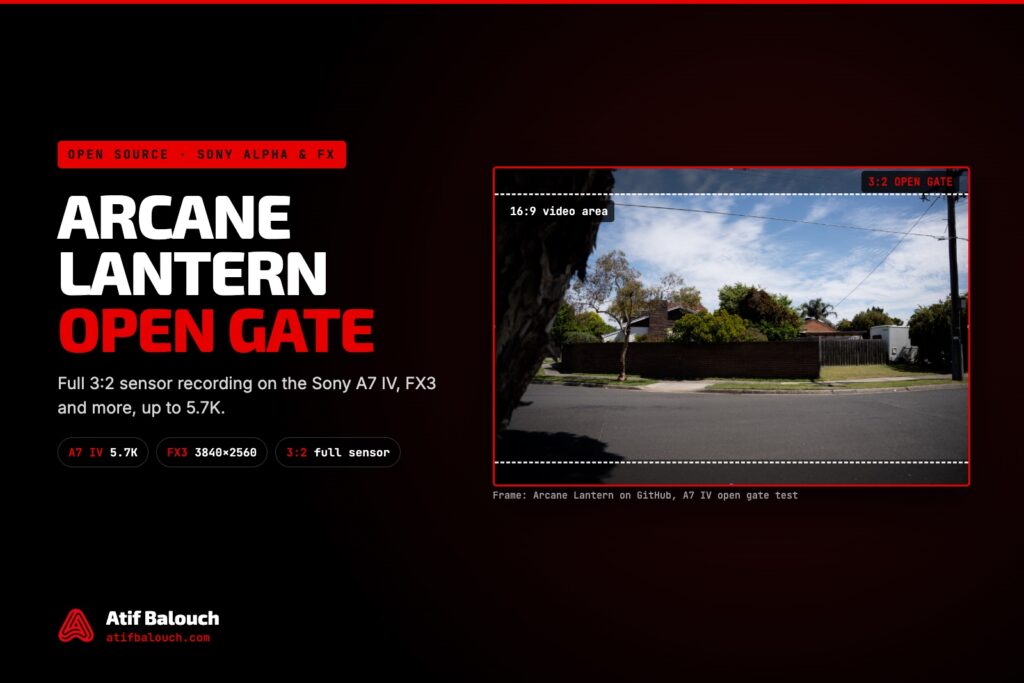
Image: Arcane Lantern on GitHub
Every time new technology changes how films are made, someone calls it cheating. People said it about digital cameras, and they say it now about software that changes what a camera can do. What is happening in the independent camera community this month shows something different. Developers and camera owners are working together to unlock features that the hardware could always handle.
Arcane Lantern is the newest example. It is an open-source project that adds open gate recording to Sony Alpha and FX cameras. The name follows two well-known community projects, Magic Lantern for Canon and Wonder Lantern, and the aim is the same: to get more out of cameras that people already own.
What open gate means
Most hybrid cameras have a 3:2 sensor, but they record video from a 16:9 band in the middle of it. The top and the bottom of the sensor go unused. Open gate records the whole sensor height and width.
That extra height matters. You can cut a 16:9 version and a vertical 9:16 version from the same take without losing much of the frame. Anamorphic lenses also benefit, because a 1.33x or 1.6x squeeze on a taller frame gives a wide, natural aspect ratio. Until now, open gate on Sony meant buying a more expensive camera or a different brand.
What Arcane Lantern has achieved
The project started with the Sony A7 IV. According to the project page, these are the main milestones so far:
- 18 November 2026: full-frame open gate on the A7 IV at 3840 x 2560, tested at 24p in 10-bit 4:2:2 S-Log in XAVC S and XAVC HS.
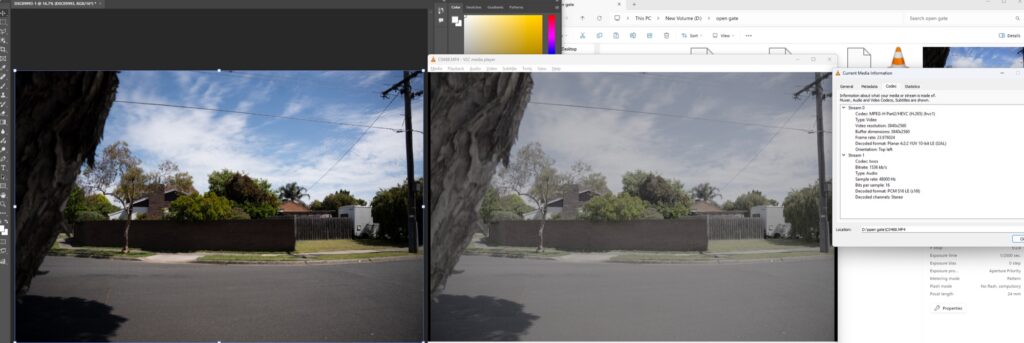
- 20 November 2026: 5.7K open gate at 5760 x 3840 on the A7 IV. In XAVC HS it records at 300 Mbps, and the developer reports a clear gain in detail over 4K.
- 24 November 2026: open gate working on the FX3 for two testers, at 3840 x 2560.
The project lists open gate for the A7 IV, A7S III, ZV-E1, FX3, A7C II, FX2, FX30 and A6700. There are also test repositories for the A7 III, the FX6 and the A1 II, although the project page does not yet report results for those cameras. The developer even has a cropped form of open gate running on the original A7S from 2014, which shows how far back this goes.

How it works
Arcane Lantern does not install new firmware in the usual sense. Its test kits connect to the camera over USB and write temporary settings into the camera’s memory. A cold boot, which means taking the battery out for a few seconds, returns the camera to stock. On the A7 IV, switching the camera off for more than a few seconds can also remove the patch.
You can apply the patch from a computer or from an Android phone:
- Windows: you install Python, then use Zadig to give the camera a libusb driver before the scripts can talk to it.
- Mac: you need Python 3.9 or later. The script asks for your administrator password so it can take over the camera’s USB connection.
- Android: an app on a phone that supports USB OTG, connected to the camera with a USB-C cable. This is the practical option on location, because you need to apply the patch again after every cold boot.
During the process, you confirm “Image Transfer (MSC)” on the camera several times as it restarts its connection.
What you get on the A7 IV
- The full sensor: a 3:2 recording of the whole sensor, at 4K (3840 x 2560) or 5.7K (5760 x 3840).
- A 3:2 screen: the rear screen shows the 3:2 picture.
- An anamorphic preview: the C3 button cycles the de-squeeze preview between normal 3:2, 1.33x anamorphic (2:1) and 1.6x anamorphic (2.4:1).
- Playback: 4K open gate clips play back in the camera. 5.7K clips do not yet, so you check them on a computer.
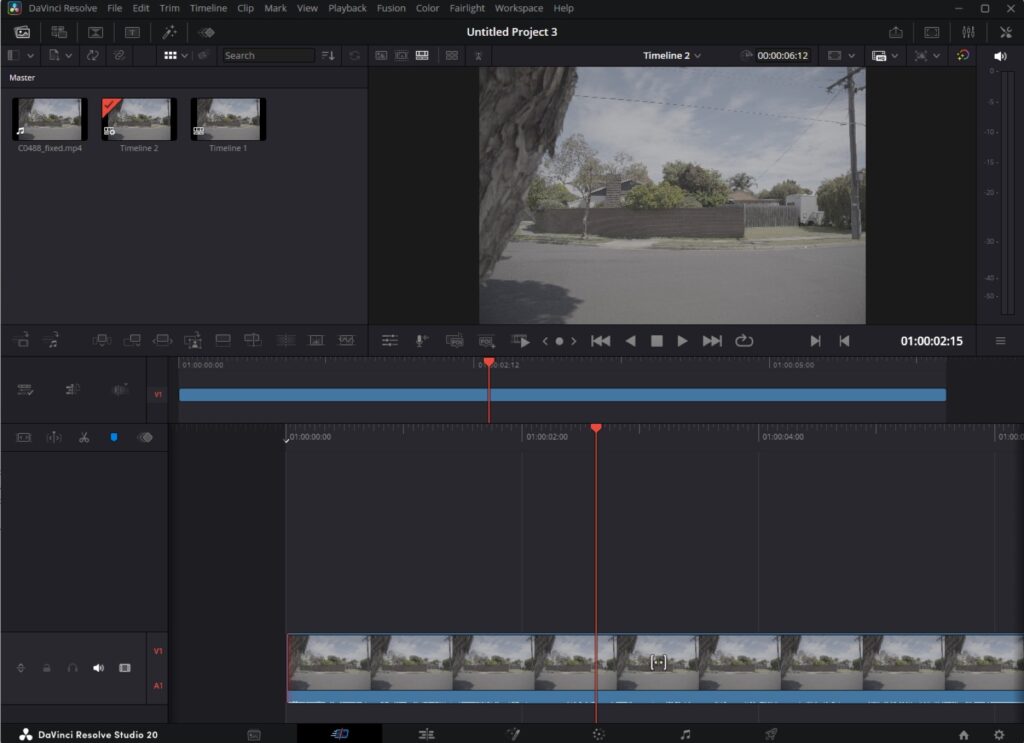
- Editing: the developer has fixed the file metadata, so editors such as DaVinci Resolve no longer need a remux step.
- Noise reduction: the kit can switch off the camera’s own movie noise reduction if you want finer grain and more fine detail.
The FX3 kit
The FX3 kit is a port of the A7S III kit, because the FX3 on firmware 7.02 runs the same image-processor software as the A7S III with the same IMX510 sensor. Its notes are detailed and honest about what works:
- The file is true open gate. It records 3840 x 2560 at 23.98p in XAVC HS 4K and XAVC S 4K. A tester measured coverage of 99.7 to 99.99% of the sensor width and height against a full-sensor photo.
- 25p and 29.97p are new. 25p has recorded open gate for a tester in PAL. 29.97p uses the same design but had not been tested when this post was written.
- No high frame rates. 50p, 60p, 100p and 120p cannot be open gate. The full-height sensor read-out takes about 26 ms per frame, so 30p is the limit.
- The FX3’s own De-Squeeze Display is set up for the 3:2 picture, in place of a C3 preview.
There is one serious warning. On both testers’ cameras, playing an open gate clip back in the camera failed, and a second attempt froze the camera until the battery was pulled. The developer has traced the cause and offers an optional fix, which had not been tested on a camera at the time of writing. Until it is proven, check your FX3 clips on a computer.
How it compares with the HDMI trick
Earlier this month I wrote about the FX3 open gate HDMI trick, where photo mode sends a 3:2 view to an Atomos Ninja. That method records the photo live view, and tests point to an 8-bit signal that breaks apart in a heavy grade.
Arcane Lantern is different. It changes the camera’s own video recording, so the file comes from the normal video pipeline inside the camera, at a true 3840 x 2560. For anyone who wants open gate on an FX3, this is the more serious route, as long as you accept the risks below.
Creators already testing it
Camera creators on YouTube picked this up within days. Matti Haapoja tried it on his own FX3, and two more creators have covered the project:
Lens and autofocus work
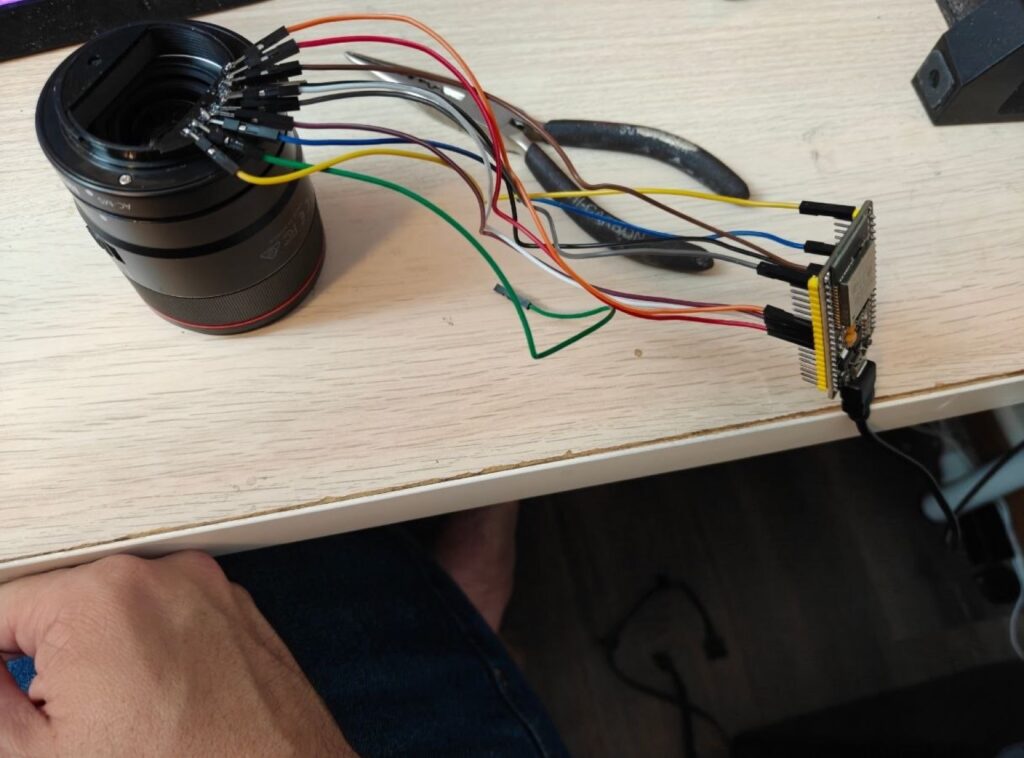
The project also has a longer goal. The developer is reverse engineering how Sony lenses talk to the camera, with test rigs that copy a lens and record its signals. One question many shooters ask is whether the 15 fps burst limit with non-Sony lenses on cameras like the A1 and A9 can be removed. The developer’s answer is “probably”, but they do not have one of those cameras to develop on.
The risks
This is unofficial work, and you should treat it that way:
- Sony does not support it. The kits use the camera’s service connection. Ask Sony or your dealer how this affects your warranty before you try it.
- It is in testing. Features are confirmed one tester at a time, and some steps had not run on a camera when this post was written.
- Playback can freeze a camera. The FX3 playback problem shows that things can go wrong, even if a battery pull recovered it.
- The patch is temporary. It disappears after a cold boot, so build the extra step into your routine on set.
My advice is to test it on a body you do not depend on, and to keep it away from paid work until it has more hours behind it. For personal projects and tests, it is an exciting way to get more from a camera you already have.
Why this matters for independent filmmakers
Open gate used to be a reason to spend much more on a camera. If a free, open-source project can unlock it on bodies like the A7 IV and FX3, more of a small budget can go to the people and places in front of the camera.
The project is also a community effort. Testers send logs, and the developer publishes detailed notes for everyone to read. Tools do not make a film on their own, and a camera cannot direct an actor or decide what a scene means. What a project like this does is remove a technical limit, so that more people can shoot the way they imagine.
How to follow or help
- GitHub: github.com/ArcaneLantern, with a test kit for each camera.
- Testing: the developer is looking for owners willing to test builds and collect logs. The project also has a Discord server, linked from GitHub.
- Support: you can support the work through the project’s Ko-fi page.
If you plan media for open gate, my Sony FX3 data rate calculator covers the camera’s standard recording formats. I will add open gate figures once the formats settle.
Sources
- Arcane Lantern on GitHub: project page with milestones and the camera list
- A7 IV open gate test kit: set-up steps, 5.7K details and known issues
- FX3 open gate test kit: FX3 results, frame rate limits and the playback warning
- Sony Alpha Rumors: Arcane Lantern aims to extend open gate on all Sony Alpha and FX cameras
- Matti Haapoja: I hacked my Sony FX3 To Get OPEN GATE
- elvis: someone hacked open gate onto the Sony FX3.
- Henry Charly: Why Everyone’s Talking About Open Gate on Sony Cameras.
I am a Licensed Freelancer cameraman in Dubai. If you test Arcane Lantern on your own camera, send me your results through the contact page.