By Atif Balouch, director of photography, Dubai
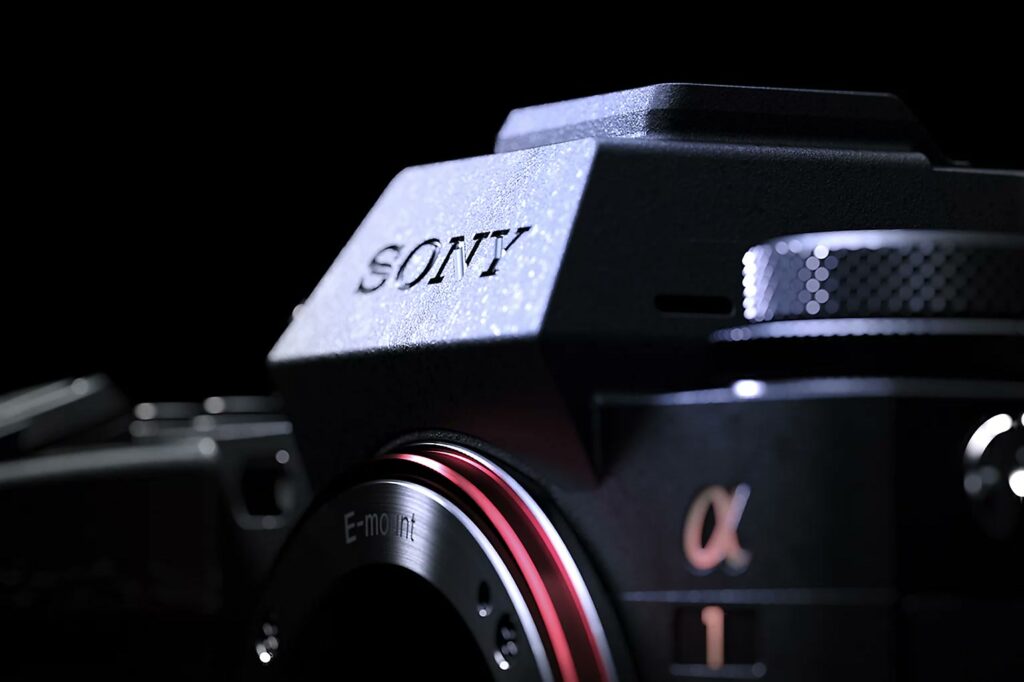
Sony Alpha 1 (ILCE-1). Image: Sony
The Sony Alpha 1 weighs 737 g and records 8K video oversampled from a full-width 8.6K readout. It shares S-Cinetone colour with Sony’s Cinema Line cameras and also records S-Log3. A 16-bit RAW signal is available over HDMI. The same weather-sealed body also shoots 50.1-megapixel stills at up to 30 frames per second.
The a1 launched at $6,498, which is a lot for a hybrid body. On commercial and corporate shoots, though, clients often expect high-resolution photographs and cinema-quality video from one operator. I own the a1 and use it on paid jobs, and it is the most complete hybrid camera I have worked with.
8K Without Overheating: One Setting Matters
On long interviews and live events, reliability matters more than any specification. Before I used the a1 regularly, my main concern with compact 8K cameras was a thermal shutdown during a take.
With Auto Power OFF Temp left at its default Standard setting, continuous 8K recording stops after roughly 30 minutes. Set to High, the camera behaves very differently. In my own test, running on one internal NP-FZ100 battery at room temperature, it recorded 79 minutes of continuous 8K before reaching its thermal limit. In 4K at 60p or 120p, it has never overheated indoors for me, and recording continues until the card or battery runs out.
One NP-FZ100 lasts around 80 to 90 minutes of heavy 4K and 8K recording. The camera can also run on USB-C PD, but charging the internal battery while shooting 8K adds heat inside the body. For long 8K takes I use a dummy battery or the VG-C4EM vertical grip, which holds two NP-FZ100 batteries and keeps their heat away from the main chassis.
How I Use 8K and 4K on Set
The recording modes do not all sample the 50.1MP stacked sensor in the same way, and that affects how I choose them.
- Full-frame 8K (up to 30p) for reframing: Few clients ask for an 8K delivery, yet I shoot interviews in 8K most of the time. The image is oversampled from the full 8.6K readout and shows no visible aliasing or moiré. On a 4K timeline there is room to punch in up to 200%, so one camera angle can provide both a medium shot and a close-up.
- Super 35 for the sharpest 4K: In my side-by-side tests, full-frame 4K up to 60p looks softer than the 8K image. When I deliver in 4K and want maximum detail, I switch to APS-C/Super 35 mode. This mode oversamples a 5.8K area of the sensor down to 4K, and the result is clearly sharper.
- 4K 120p with almost no crop: For slow-motion B-roll, 4K 120p applies a crop of only about 1.1x. Full-frame lenses keep nearly their normal field of view.
Media and Codecs
Both card slots accept CFexpress Type A and UHS-II SD cards, which makes media management on location easier.
Expensive CFexpress cards are not needed for every mode. In my use, fast V90 UHS-II SD cards handle internal 8K 30p in 10-bit XAVC HS and most long-GOP 4K modes without problems. Since firmware 1.30, 8K can also be recorded in 10-bit 4:2:2. For 4K 120p All-Intra and high-speed S&Q clips, I use CFexpress Type A.
For productions that want RAW, the full-size HDMI port outputs a 16-bit RAW signal at 4.3K. An Atomos Ninja V or Ninja V+ records it as 12-bit ProRes RAW at up to 60p.
Low Light and Fast Colour
- Two gain stages in S-Log3: The a1 has a second gain circuit, although Sony does not publish the exact ISO values. In S-Log3 the base ISO is 800, and community tests place the second stage between roughly ISO 3200 and 4000. Below that point, shadows show visible grain; once the second stage engages, they become cleaner again. The a1 cannot match the 12,800 high base ISO of the 12MP FX6 or a7S III. Even so, the higher setting has helped me on many location shoots where large lights were not possible.
- S-Cinetone for same-day delivery: When a corporate client needs footage on the same day, there is no time for a full grade. S-Cinetone gives natural skin tones and gentle highlight roll-off straight out of camera. It also matches well with Sony cinema cameras on multi-camera shoots.
Readout, Autofocus and Audio
Despite its 50.1MP resolution, the a1 reads out its sensor quickly. Published lab tests measure about 16.5 ms in 8K and around 8 ms in 4K, which keeps handheld pans and fast subjects free of obvious skew. Sony claims more than 15 stops of dynamic range in S-Log3, while independent tests measure somewhat less. The shadows recover cleanly in the grade.
When I work alone, the 759-point phase-detection autofocus does much of the work. Real-time Eye AF tracks people and animals, and it also recognises birds. It works in every video mode, including 8K 30p and 4K 120p, so I can concentrate on framing and light. The 5-axis IBIS, rated at 5.5 stops, smooths handheld movement, especially with Active Mode switched on. The 9.44-million-dot, 240Hz OLED viewfinder stays clear in bright sun.
For audio, the 3.5mm microphone input is adequate. Sony’s digital Multi Interface Shoe is the better route: with the XLR-K3M adapter or the ECM-B1M shotgun microphone, audio is passed digitally into the camera at 24-bit, with up to four channels on the XLR-K3M and no cables.
My one ergonomic complaint concerns the 3.0-inch rear LCD. It tilts 107 degrees up and 41 degrees down, which is fine at waist or eye level. A fully articulating screen would make low-angle rigs and self-monitoring easier.
Why the a1 Stays in My Kit
For narrative cinema alone, a dedicated cinema camera would be the obvious choice. For studio stills alone, most of the a1’s video features would go unused. The a1 earns its place on jobs where I have to deliver both: 50MP high-speed stills one moment, then 10-bit 8K or 4K 120p video the next, without changing lenses or rigs. It is expensive, but on hybrid jobs it does everything I need from one compact body.
Need photography and video from one operator on your next shoot in Dubai or the UAE? See my equipment list or contact me.