By Atif Balouch, director of photography, Dubai
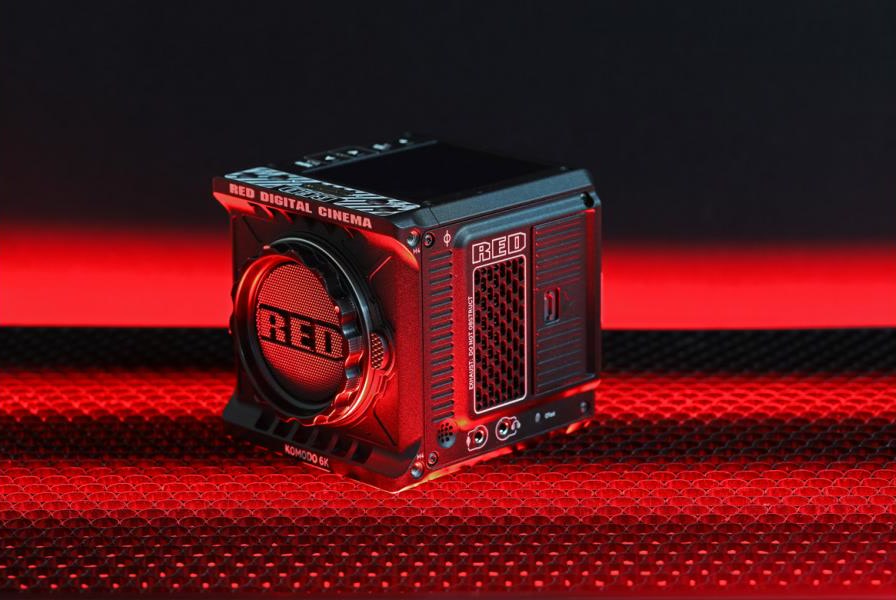
RED Komodo 6K. Image: Direct Digital
I bought my RED Komodo 6K soon after its release in late 2020 and paid roughly $6,000 for the bare body. A global shutter sensor and access to the RED system in a 4-inch cube was very good value at the time. In March 2025, RED cut the price of the original Komodo to $2,995. New stock is now hard to find, and clean used bodies sell for well under $3,000. The upgraded Komodo-X has also dropped, and in November 2026 it is selling for $4,995 at major retailers.
I do not regret paying the launch price. The camera paid for itself on commercial and narrative jobs years ago. What surprises people is that I still use it regularly, next to a Sony FX6, a Nikon ZR and a Blackmagic PYXIS 12K.
Why the Komodo Stays in My Kit
On paper, the other three cameras cover almost every situation. The Sony FX6 is my documentary and corporate camera. Its electronic variable ND and reliable autofocus make it the first choice when I move fast in changing light, and dual base ISO helps in low light. The Nikon ZR is my light travel body. It records full-frame 6K R3D NE and has 7.5 stops of in-body stabilisation. Audio is recorded internally in 32-bit float. For commercial clients who need very high resolution or 3:2 open gate, I use the Blackmagic PYXIS 12K.
The Komodo is a Super 35 camera from 2020, yet it still has a place on my shoots. Four reasons explain this.
- Global shutter: None of my other three cameras has a global shutter. On a car mount or during fast whip-pans, the Komodo shows no rolling shutter skew. Strobe lighting and VFX plates are also handled cleanly, and straight lines stay straight in fast motion.
- Size and connections: The body weighs about 2.1 lb and is a symmetrical 4-inch cube. It balances easily on small gimbals and fits inside cars, where the larger PYXIS 12K or the longer FX6 is harder to place. The Nikon ZR relies on a micro-HDMI port, while the Komodo has a locking 12G-SDI output and a 2-pin LEMO power input built for daily set use.
- Super 35 sensor and R3D colour: Most new cameras are full frame. A Super 35 sensor lets classic cinema zooms and Super 35 primes show their intended field of view. The R3D files and RED’s IPP2 colour pipeline render skin tones and highlight roll-off well, and I rarely have to correct them heavily in DaVinci Resolve.
- A simple camera: The original Komodo has no stills mode and no hybrid menus. It is a cinema camera with a short menu system, and it keeps the attention on lighting and composition.
How the Price Fell from $6,000 to Under $3,000
Competition from Blackmagic Design and Sony showed that small production teams could get wide dynamic range and RAW recording without spending five figures. Established cinema brands had to adjust their prices as a result. Nikon’s acquisition of RED in 2024 has also reshaped the lineup around Z-mount bodies and the Komodo-X. As a consequence, a camera that was once an aspirational tool is now affordable for independent filmmakers.
The Real Cost of a Komodo Package
I have built and rebuilt this rig many times. The body is only the starting cost, because the Komodo is a modular cinema camera that needs a supporting system before a paid shoot.
- Media and power: The original Komodo records to CFast 2.0 cards. The Komodo-X, Nikon ZR and PYXIS 12K use CFexpress Type B. CFast cards were expensive at launch and cost much less today, although approved, reliable media is still essential. Power comes from two Canon BP-9 series battery slots, or from a V-mount plate through the 2-pin LEMO input. High-capacity BP-975 batteries are the practical choice.
- Monitoring and rigging: The 2.9-inch 1440 × 1440 touchscreen on top shows the image and the menus, and it is sharp. On a shoulder rig or a gimbal, however, a fixed top screen is awkward. A cage and a top handle are needed, together with a bright external monitor on 12G-SDI.
- Lenses and adapters: The original Komodo has an RF-style mount, and RED supplies a mechanical Canon RF-to-EF adapter in the box. Manual and vintage cinema lenses can be mounted at once. For electronic iris control, autofocus or drop-in filters, an electronic adapter is needed, such as Canon’s drop-in filter adapter or a Meike adapter with built-in ND.
Even with rigging and media included, a complete Komodo package in 2026 costs much less than mine did in 2020. Six years of third-party cages and accessories are also available on the used market.
Verdict After Six Years
Whether the original Komodo 6K is the right purchase in 2026 depends on the kind of work you do.
- It suits narrative films and commercials where the scenes are lit and focus is pulled by hand. Music videos are a good fit as well. For under $3,000, it offers a Netflix-approved global shutter sensor with RED colour science.
- It is a weaker choice for solo event and wedding work, or fast documentary shooting, that depends on continuous autofocus and internal ND. Full-resolution 6K at high frame rates is also limited. For 6K at 80 fps, CFexpress media and a locking mount, the discounted Komodo-X is the better option.
Six years ago, roughly $6,000 bought me a camera that changed the look of my productions, and I still enjoy using it next to newer cameras. The same sensor and RAW workflow, with the same global shutter, now cost less than $3,000. For independent filmmakers, that is one of the best values available.
Need the RED Komodo, or a matched multi-camera package, on your next shoot in Dubai or the UAE? See my equipment list or contact me.